



ข้อบังคับบริษัท
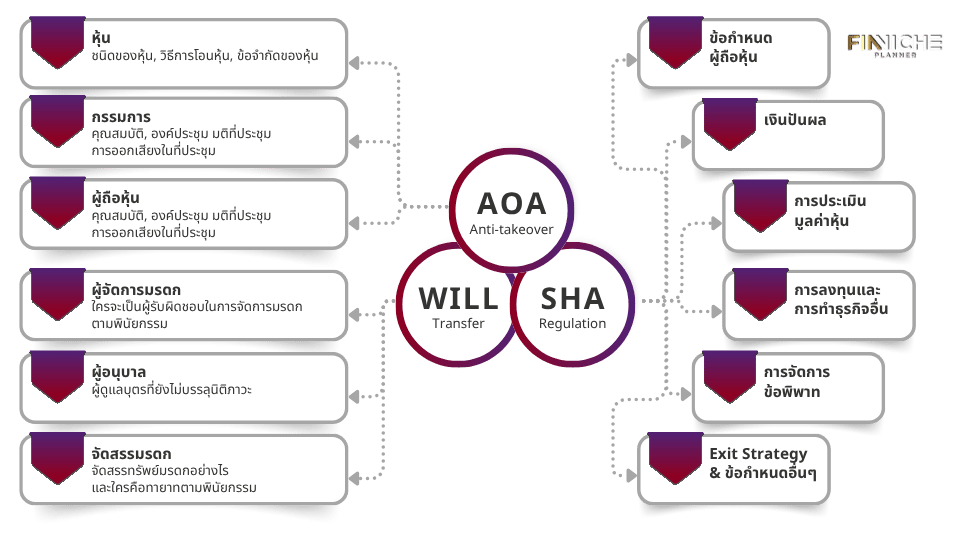
หัวใจสำคัญของ “ข้อบังคับบริษัท” ของบริษัทโฮลดิ้ง คือ เป็นเอกสารทางกฎหมายที่มีผลผูกพันต่อคณะกรรมการบริษัท ผู้ถือหุ้น และบุคคลภายนอก ที่มีจุดประสงค์เพื่อการควบคุมการบริหารงาน และปกป้องความเป็นเจ้าของในหุ้นของธุรกิจครอบครัว (Anti-takeover) ซึ่งในข้อบังคับควรมีเนื้อหาที่ครอบคลุมเรื่องเหล่านี้
1. หุ้น
ในหัวข้อนี้จะระบุถึงชนิดของหุ้น (เป็นหุ้นสามัญ หุ้นบุริมสิทธิ มีสิทธิในการออกเสียง หรือรับเงินปันผลแตกต่างกันอย่างไร) ข้อกำหนดการโอนหุ้น (เพื่อกำหนดให้โอนหุ้นระหว่างสมาชิกครอบครัวเท่านั้น และขั้นตอนการโอนหุ้นต้องปฎิบัติอย่างไรบ้าง) ข้อจำกัดของหุ้น (อาจกำหนดข้อห้ามบางประการ เช่น ไม่ให้นำหุ้นบริษัทโฮลดิ้งไปจำนำ) เป็นต้น
2. กรรมการ
ควรระบุถึงคุณสมบัติของผู้มีสิทธิเป็นกรรมการ การคัดเลือกกรรมการของบริษัทโฮลดิ้งครอบครัว และการประชุมกรรมการ ซึ่งระบุถึงองค์ประชุม เรื่องที่ต้องขออนุมัติในที่ประชุม และสิทธิออกเสียง
3. ผู้ถือหุ้น
ในหัวข้อผู้ถือหุ้นก็เช่นเดียวกัน คือควรระบุคล้ายกับกรรมการ คือ คุณสมบัติของผู้ถือหุ้น ผู้มีสิทธิรับโอนหุ้น องค์ประชุมในการประชุมใหญ่ผู้ถือหุ้น เรื่องที่ต้องขออนุมัติในที่ประชุม สิทธิและวิธีการลงคะแนนเสียง
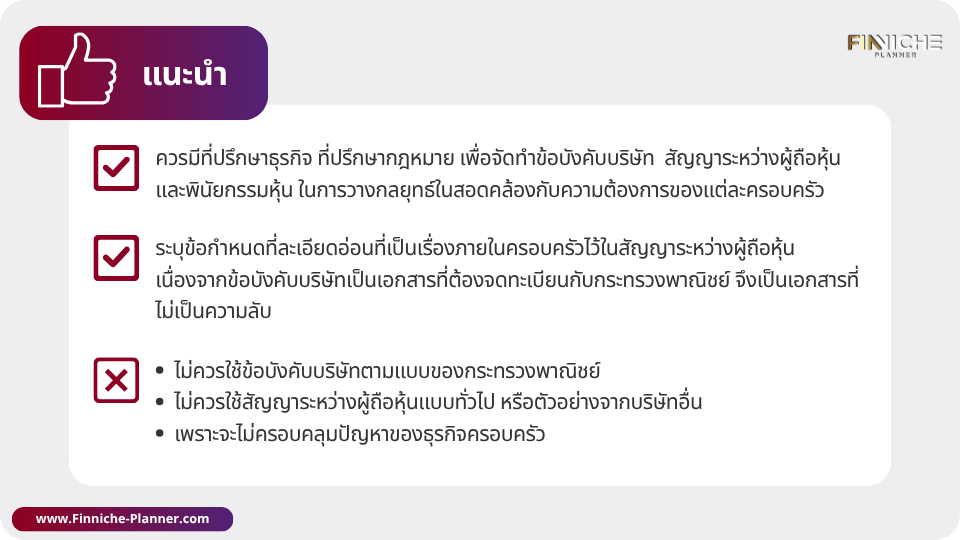
“ข้อบังคับบริษัท” ของบริษัทโฮลดิ้งครอบครัว จะไม่เหมือนกับ “ข้อบังคับบริษัท” ของบริษัททั่วไป เพราะจะกำหนดทั้งโครงสร้างการบริหารงาน, การถือครองหุ้นและข้อจำกัดของหุ้น, สิทธิและหน้าที่ของผู้ถือหุ้น, วิธีการโอนหุ้น, และกฎระเบียบต่างๆ ซึ่งมีความซับซ้อน ต้องได้รับการวางแผนให้ใช้งานทางกฎหมายได้จริงและเหมาะสมกับแต่ละธุรกิจและครอบครัว จึงควรได้รับคำปรึกษาจากที่ปรึกษาที่มีประสบการณ์ในการจัดตั้งบริษัทโฮลดิ้งครอบครัว
สัญญาระหว่างผู้ถือหุ้น
สัญญาระหว่างผู้ถือหุ้น เป็นเอกเทศสัญญาที่ผูกพันระหว่างผู้ถือหุ้น ที่จะกำหนดสิทธิ ความรับผิดชอบ และความสัมพันธ์ระหว่างผู้ถือหุ้น ซึ่งจะช่วยหลีกเลี่ยงข้อพิพาท ช่วยให้การตัดสินใจเป็นไปอย่างราบรื่น และปกป้องผลประโยชน์ในระยะยาวของครอบครัวและธุรกิจ เพื่อสร้างข้อตกลงที่ครอบคลุม จำเป็นต้องกล่าวถึงหัวข้อสำคัญหลายประเด็นนอกเหนือจากในข้อบังคับบริษัท
1. ข้อกำหนดที่ให้ผู้ถือหุ้นปฏิบัติตาม
เช่น การทำพินัยกรรมหุ้น หรือ การลงลายมือชื่อในเอกสารทางกฎหมายที่ครอบครัวตกลงว่าต้องทำเพื่อปกป้องประโยชน์สูงสุดของธุรกิจครอบครัว
2. แนวทางการจ่ายเงินปันผล
ที่ระบุจำนวนเงินปันผล ความถี่ของการจ่ายเป็นรายปี รายไตรมาส หรือนำไปลงทุนต่อในธุรกิจ โดยให้แน่ใจว่าสมาชิกในครอบครัวทุกคนทราบดีว่าจะได้รับส่วนแบ่งกำไรเมื่อใดและอย่างไร
3. กลยุทธ์ในการออกจากตำแหน่ง (Exit Strategy)
โดยให้รายละเอียดว่าผู้ถือหุ้นสามารถมีทางเลือกในการออกจากการเป็นผู้ถือหุ้นได้อย่างไร และหุ้นของจะถูกขายหรือโอนภายใต้เงื่อนไขใด ซึ่งสิ่งนี้มีความสำคัญโดยเฉพาะในธุรกิจครอบครัว เพื่อให้แน่ใจว่าการเปลี่ยนผ่านจะเป็นไปอย่างราบรื่น
4. มูลค่าหุ้นหรือวิธีการประเมินมูลค่าหุ้น
ในช่วงที่มีการโอนหุ้นในสถานการณ์ต่างๆ ผู้ถือหุ้นจะใช้ราคาใดในการโอนหุ้น ซึ่งสิ่งนี้จะช่วยให้การโอนหุ้นเป็นไปอย่างยุติธรรมและโปร่งใส
5. การลงทุนและการทำธุรกิจอื่น
เงินทุนของบริษัทมีแนวทางการลงทุนอย่างไร มีข้อจำกัดอย่างไร และผู้ถือหุ้นมีสิทธิทำธุรกิจอื่นๆหรือไม่ การกำหนดในสัญญาจะช่วยให้ปกป้องบริษัทโฮลดิ้งครอบครัวจากความขัดแย้งทางผลประโยชน์ และช่วยให้มั่นใจว่าผลประโยชน์ทางธุรกิจของครอบครัวยังคงสอดคล้องกัน
6. การจัดการข้อพิพาท
สัญญาควรมีกลไกการแก้ไขข้อขัดแย้ง เช่น การไกล่เกลี่ย หรือกระบวนการที่ชัดเจนในการแก้ไขข้อขัดแย้ง ซึ่งจะช่วยให้สมาชิกในครอบครัวหลีกเลี่ยงการต่อสู้ทางกฎหมายและรักษาความสามัคคีภายในธุรกิจได้
7. ข้อกำหนดอื่นๆ
เช่น การรักษาข้อมูลที่เป็นความลับ แนวทางการใช้เงินทุนและการตรวจสอบภายในบริษัท เป็นต้น
การจัดทำสัญญาระหว่างผู้ถือหุ้นที่มีโครงสร้างที่ดีจะช่วยการกำกับดูแลและความยั่งยืนของบริษัทโฮลดิ้งครอบครัวได้อย่างมาก โดยคงเจตนารมณ์ชองผู้ถือหุ้นทุกคนให้มีเป้าหมายและความคาดหวังที่สอดคล้องกัน
พินัยกรรมหุ้น
พินัยกรรมหุ้นมีบทบาทสำคัญที่ช่วยให้มั่นใจว่าการโอนหุ้นจะได้รับการดำเนินการอย่างมีประสิทธิภาพตามเจตนาของครอบครัว และไม่ก่อให้เกิดข้อพิพาทหรือปัญหาทางกฎหมาย พินัยกรรมหุ้นที่ร่างขึ้นจะช่วยลดความยุ่งยากทางกฎหมาย เมื่อเกิดเหตุการณ์ขึ้นหากไม่มีข้อตกลงที่ชัดเจนเกี่ยวกับวิธีการส่งต่อหุ้น สมาชิกในครอบครัวอาจต้องผ่านขั้นตอนทางกฎหมายที่ซับซ้อน เช่น การพิสูจน์เอกสาร ความเป็นเจ้าของ ทายาทโดยธรรม การตั้งผู้จัดการมรดก ซึ่งอาจใช้เวลานานและมีค่าใช้จ่ายสูง และส่งต่อให้ทายาทได้ตามที่ตั้งใจ
Articles of Association
The Articles of Association (AOA) of a Family Holding Company is a legally binding document for the board of directors, shareholders, and external parties, aimed at managing operations and safeguarding the family business’s ownership of shares (Anti-takeover). Thus, this AOA should comprehensively address several key matters:
1. Shares
This section outlines the types of shares—whether common or preferred—and details any differences in voting rights or dividends. It also specifies stock transfer requirements, ensuring share transfer between only family members, along with the steps to follow during the transfer. Additionally, stock restrictions may apply, such as prohibiting the pledging of Holding Company shares.
2. Directors
This section defines the qualifications for directors, the process for their selection, and guidelines for board meetings. This includes the quorum of meetings, resolutions for approval at the board level, and the directors’ voting rights.
3. Shareholders
Similar to the directors, the section on shareholders should specify qualifications, who is eligible to receive share transfers, quorum for shareholders’ general meetings, and what resolutions need approval during these meetings, as well as, voting rights.
It’s important to note that the Articles of Association (AOA) of a Family Holding Company will differ from those of operating companies. Because, they will include specific guidelines related to the management structure, shareholding rules, share transfer methods, and shareholders’ rights and duties. These provisions are more complex and require thorough planning to ensure legal feasibility and suitability for the business and family. Therefore, seeking advice from an experienced consultant in setting up a Family Holding Company is highly recommended to ensure everything is structured appropriately.
Shareholders’ Agreement
The Shareholders’ Agreement is a binding contract between shareholders that outlines their rights, responsibilities, and relationships. This agreement helps to avoid disputes, streamline decision-making, and protect the long-term interests of both the family and the business. To create a comprehensive Shareholders’ Agreement, several key topics must be covered beyond the Articles of Association.
1. Shareholder Compliance Requirements:
Shareholders may be required to follow specific actions, such as creating a share will or signing legal documents that safeguard the family’s business interests. These steps ensure the continuity of family values and business goals.
2. Dividend Payment Guidelines:
This section should specify the dividend amounts, the frequency of payments (whether annual, quarterly, or reinvested in the business), and ensure that all family members are informed about when and how they will receive their dividend.
3. Exit Strategy:
It is essential to detail how shareholders may exit the company and under what conditions their shares can be sold or transferred. This is particularly crucial for family businesses to ensure smooth transitions without disrupting operations.
4. Share Valuation Method:
When shares are transferred in various situations, it is important to establish the share value or valuation method. This ensures transparency and fairness during the transfer of shares.
5. Investments and Other Business Activities:
The agreement should outline how the company’s capital is invested and define any limitations on investments. It should also clarify whether shareholders are allowed to engage in other business activities, thus protecting the family holding company from conflicts of interest.
6. Conflict Resolution Mechanisms:
Including conflict resolution mechanisms, such as mediation or other processes for resolving disputes, helps avoid costly legal battles and keeps harmony within the family business.
7. Additional Provisions:
Other important clauses may cover confidentiality, guidelines for capital management, and internal company audits.
Consequently, a well-structured Shareholders’ Agreement can greatly enhance the governance and sustainability of the family holding company, ensuring alignment of shareholders’ goals and expectations.
Share Will
A Share Will plays a critical role in ensuring the untroubled transfer of shares according to the family’s intentions, preventing potential conflict or litigation. A well-drafted share will minimize the risk of legal disputes by clearly outlining the intended distribution of shares. Without a clear agreement, family members may face complex legal procedures, such as proving ownership, identifying legal heirs, or appointing a heritage executor, which can be both time-consuming and costly.
🔖อ่านบทความของเราในหัวข้ออื่นๆได้ที่นี่
สนใจสอบถามข้อมูลเพิ่มเติมเกี่ยวกับการจัดตั้งบริษัทโฮลดิ้ง Holding Company
หรืออยากนัดปรึกษากับเรา 📌 [ฟรี] 1 ชั่วโมงได้ที่ Google Calendar
อีเมล : Finniche.Planner@gmail.com
หรือกรอกแบบฟอร์มที่ Contact Us

ฟินนิช แพลนเนอร์ ที่ปรึกษาธุรกิจครอบครัว
#ที่ปรึกษาธุรกิจครอบครัว #ธุรกิจครอบครัว #FamilyHoldingCompany #โครงสร้างบริษัท #โครงสร้างผู้ถือหุ้น
